
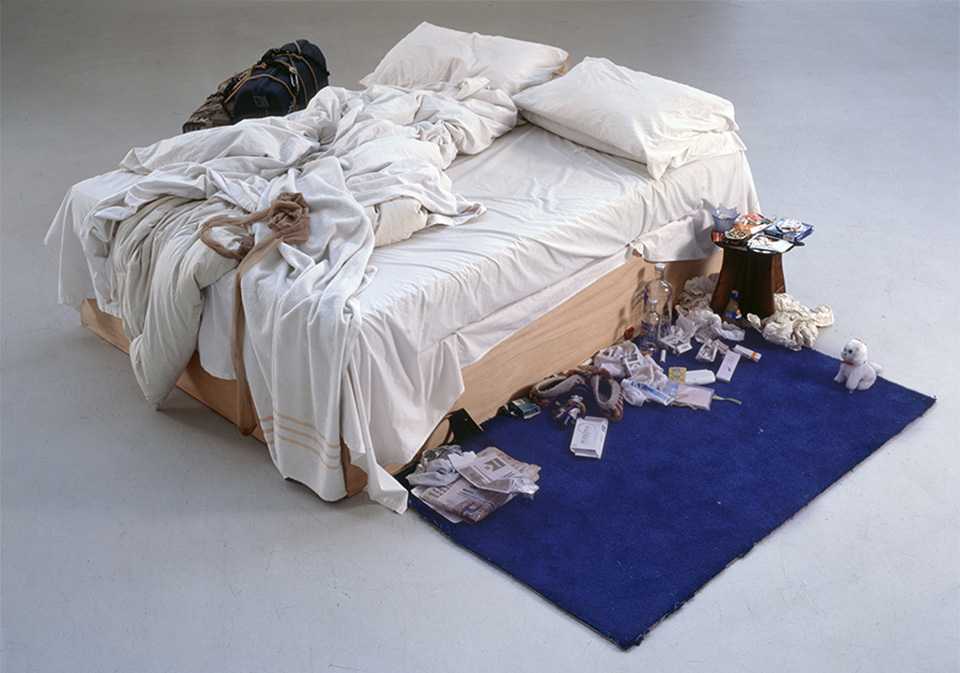
Tracey Emin was catapulted into the public eye in the 1990s with iconic works like her Turner Prize-nominated My Bed, she sparked fierce critical and public debate, challenging the very definition of what art could be. Emin’s total disregard for any separation of the personal and the public, along with her commitment to unapologetic self-expression, came to define a historic moment in British culture and global art history.
Now, Tate Modern’s sweeping new show, Tracey Emin: A Second Life, captures the full weight of her legacy. This landmark exhibition traces 40 years of Emin’s groundbreaking practice, showcasing career-defining sensations alongside works never exhibited before.
The Raw Reality of a “Second Life”
As the exhibition’s title suggests, Emin is creating from the other side of a brutal battle. Diagnosed with aggressive squamous cell bladder cancer in 2020, Emin’s survival required devastating surgeries: the removal of her bladder, a full hysterectomy, and the loss of her urethra and parts of her vagina.
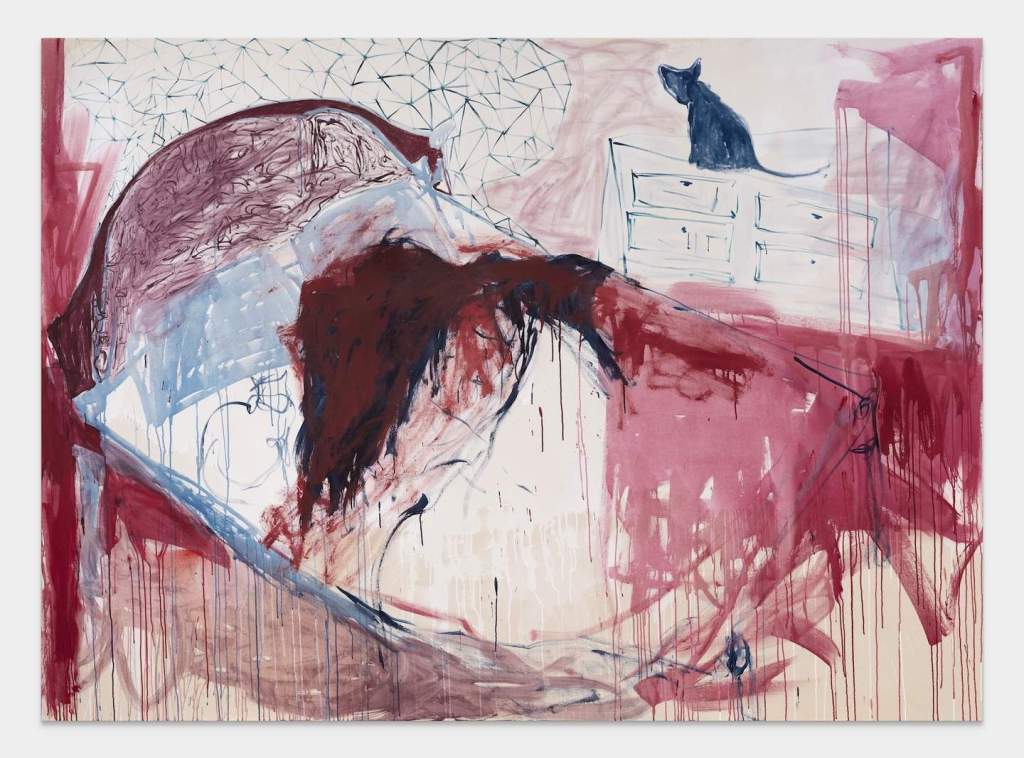
Left navigating life with a urostomy stoma bag, Emin’s fight with cancer has profoundly altered her day-to-day existence. Yet, instead of retreating or hiding this reality, she brings the blood, the stoma, and the battle-worn female form directly into the gallery. Through striking new photographs of her post-operative body, Emin continues to challenge boundaries, using the female body as a powerful tool to explore passion, pain, and healing.
Trauma, Exploitation, and the Teenage Experience
Emin’s work has always been a chaotic, confessional battleground for her own history. A central, unavoidable theme of her art is the vulnerability and exploitation of young women by older men—deeply rooted in her own traumatic experiences of underage sex and abuse while growing up in Margate.
By stitching her darkest traumas into appliqué blankets, writing her intimate thoughts in glowing neon, and painting them in raw, frantic strokes, she forces audiences to look at the ugly realities of exploitation. It is deeply uncomfortable, but it gives voice to a profound vulnerability that society often prefers to sweep under the rug.
Egocentric Narcissist or Unapologetic Pioneer?
Visiting the exhibition it can get irritating that this is all about Tracy and her being ego centric, self obsessed and purely narcissistic. The argument frequently levelled against her is that raw emotion and so called “victimhood”—surviving cancer, teenage exploitation, and heartbreak—do not automatically transmute into high art.
Is her work narcissistic? In many ways, yes. It is, and always has been, entirely about being Tracey. But maybe that self-obsession is precisely the point. Her audacity lies in betting that her hyper-specific, messy, narcissistic reality will resonate on a universal scale. She refuses to sanitise her life for public consumption.
The Culmination of a Life Channeled into Art
Broadening Emin’s story, this exhibition celebrates her raw and confessional approach as she poses profound questions on love, trauma, and autobiography. Through painting, video, textiles, neons, writing, sculpture, and installation, it demonstrates her lifelong commitment to her craft.
Most importantly, the Tate Modern show highlights her recent work as the culmination of the ways she has channeled her life—every brutal, beautiful, self-obsessed inch of it—into her art. Whether you view her as a profound storyteller or an egocentric provocateur, A Second Life proves that Tracey Emin remains a force you simply cannot look away from.

